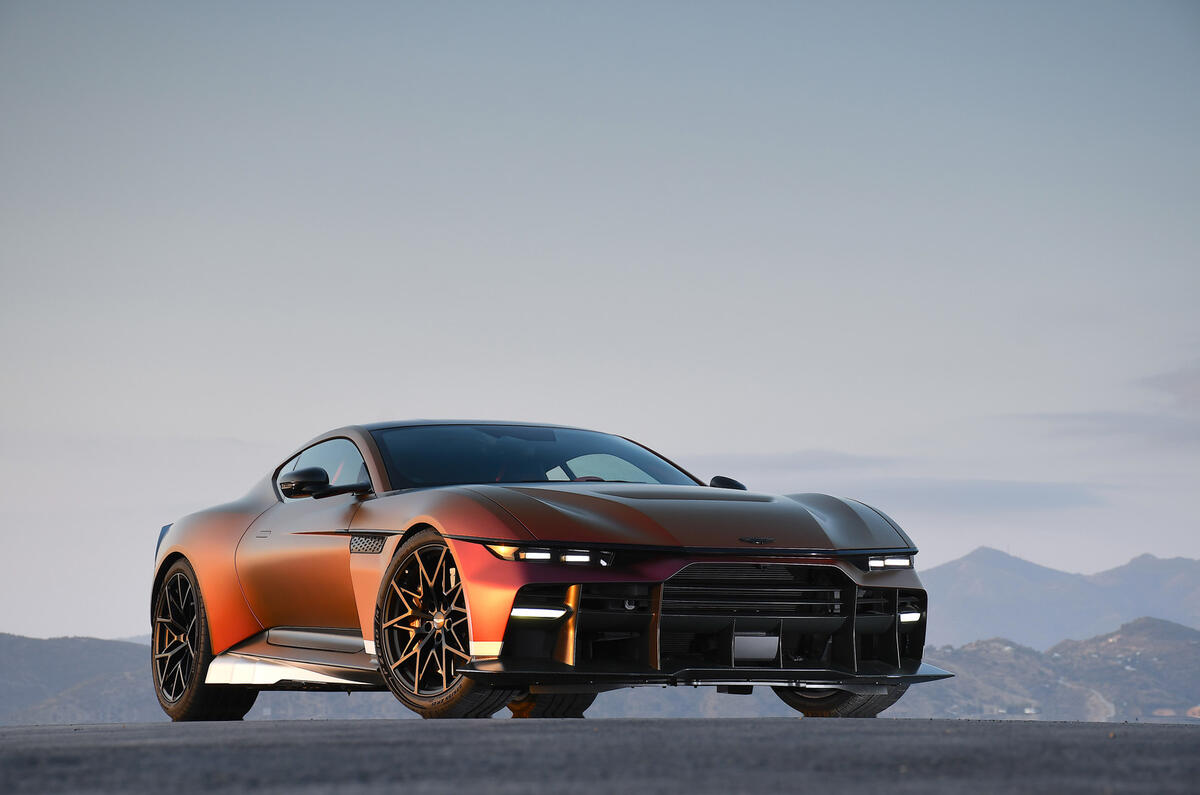
Electric hypercars have stopped being a novelty act and started setting the outright records that used to belong exclusively to combustion-engine legends. In 2025 a Chinese EV broke the 300 mph production car barrier for the first time in history.
Here is the current ranking of the fastest electric hypercars on the planet, by both acceleration and top speed, because those two things no longer belong to the same car.
The Ranking at a Glance
| # | Car | Top speed | 0-60 mph | Power |
|---|---|---|---|---|
| 1 | BYD Yangwang U9 Xtreme | 308 mph, verified | Under 2 seconds | Four motors |
| 2 | Rimac Nevera R | 267 mph, claimed | 1.66 seconds, verified | 2,107 hp |
| 3 | Rimac Nevera | 258 mph | 1.85 seconds | 23 world records |
| 4 | Pininfarina Battista | 217 mph | 1.79 seconds tested | 1,900 hp |
| 5 | Lotus Evija | 217 mph | Sub-3 seconds | 2,011 hp |
| 6 | Aspark Owl SP600 | 272 mph, prototype | 1.69 seconds to 100 km/h | Prototype |
| 7 | Tesla Roadster (next gen) | 250 mph, claimed | 1.9 seconds, claimed | Unreleased |
| 8 | Yangwang U9 (standard) | 253 mph | Under 2 seconds | Four motors |
1. BYD Yangwang U9 Xtreme: 308 mph, Verified
Nothing else on this list, electric or otherwise, currently holds a faster verified top speed. In September 2025, on a runway in Germany, the U9 Xtreme completed a fully documented, independently verified run at 308 mph (496 km/h), officially the fastest verified top speed of any production car, petrol or electric, in history.
- Top speed: 308 mph (496 km/h), verified
- 0-60 mph: under 2 seconds
- Powertrain: four electric motors
- Why it leads: the first production EV, and the first production car of any kind in years, to break 300 mph under verified conditions
2. Rimac Nevera R: 1.66 Seconds to 60 mph, Verified
If the U9 Xtreme owns top speed, the Nevera R owns acceleration outright. Its 0-60 mph time of 1.66 seconds is backed by independent test data rather than manufacturer marketing, making it the quickest-accelerating production car in the world today, of any powertrain. Peak output is 2,107 hp from a quad-motor all-wheel-drive layout, with a claimed 267 mph top speed.
- 0-60 mph: 1.66 seconds, independently verified, the fastest of any production car
- Top speed: claimed 267 mph (430 km/h)
- Power: 2,107 hp and 1,741 lb-ft
- Price: approximately 2.3 million euros, about $2.5 million
3. Rimac Nevera: 258 mph and 23 World Records
Before the R arrived, the standard Nevera was already rewriting the record books, holding 23 separate world acceleration records including an 8.58-second quarter mile, alongside a genuine 258 mph top speed. It remains one of the most complete electric hypercars ever built, and the platform underpinning both itself and the Pininfarina Battista below.
- Top speed: 258 mph (415 km/h)
- 0-60 mph: 1.85 seconds
- Notable: holds 23 world acceleration records
4. Pininfarina Battista: 1.79 Seconds, Design First
Built on the same Rimac-developed powertrain as the Nevera but wrapped in a very different philosophy, the Battista trades ultimate top speed for design and refinement. It still manages 1.8 seconds to 60 mph claimed, independently tested as low as 1.79, and 1,900 hp from four motors, though its more aerodynamically conservative body caps top speed at 217 mph.
- 0-60 mph: 1.8 seconds claimed, 1.79 seconds tested
- Top speed: 217 mph (350 km/h)
- Power: 1,900 hp and 1,900 Nm
- Price: approximately $2.2 million to $2.5 million, 150 units
5. Lotus Evija: 2,011 hp
Lotus's first all-electric hypercar produces a combined 2,011 hp from four motors, one per wheel, in a genuinely literal take on all-wheel drive. Limited to 130 examples, all sold at a reported price north of $2 million, the Evija shares the Battista's 217 mph ceiling but brings a distinctly British lightweight-engineering philosophy to the conversation.
- Power: 2,011 hp combined from four motors
- Top speed: 217 mph (350 km/h)
- Production: limited to 130 units, sold out
6. Aspark Owl: 1.69 Seconds to 100 km/h, Prototype
Technically a prototype rather than a full production car, the Aspark Owl still deserves its place on any serious ranking of electric performance extremes. The SP600 variant recorded a 0-40 mph acceleration record and a top speed of 438.7 km/h (272 mph) in June 2024 testing at Orebro Airport in Sweden, with a 0-100 km/h time of 1.69 seconds, arguably the quickest-accelerating vehicle ever built.
- 0-100 km/h: 1.69 seconds, prototype testing
- Top speed: 438.7 km/h (272 mph), prototype record
- Status: limited-production Japanese hypercar, not a mainstream production model
7. Tesla Roadster: 1.9 Seconds, Claimed
Still unreleased and unverified, the next-generation Roadster carries manufacturer claims of 1.9 seconds to 60 mph and a top speed north of 250 mph. If delivered, those figures would put genuine hypercar performance at a price point dramatically below its Rimac and Pininfarina rivals.
- 0-60 mph: claimed 1.9 seconds, unverified
- Top speed: claimed above 250 mph, unverified
8. Yangwang U9 Standard: 253 mph
The non-Xtreme version of BYD's U9 already broke into legitimate hypercar territory in its own right, with roughly 253 mph and sub-2-second acceleration. It is the platform that made the record-setting Xtreme possible, which matters: the record was not a one-off special but the top of a capable range.
- Top speed: around 253 mph
- 0-60 mph: under 2 seconds
Why the Fastest Title Keeps Splitting
Unlike the combustion hypercar world, where a single manufacturer traditionally chased both records at once, the electric era has split the fastest title into two separate competitions.
Top speed currently belongs to the BYD Yangwang U9 Xtreme, whose platform is optimised for sustained high-speed stability. Acceleration belongs to the Rimac Nevera R, whose four-motor layout is built for instant, traction-limited launches, a configuration nine of the ten fastest-accelerating electric hypercars now share.
The split exists because the engineering pulls in opposite directions. A car built for 300 mph needs low-drag aerodynamics that sacrifice downforce; a car built for 0-60 mph benefits from maximum grip and instant torque. You cannot fully optimise for both in one body.
For the first time, the quickest car in the world and the fastest car in the world are not the same car, and cannot be.
What Comes Next
Manufacturers are increasingly adopting 800-volt architectures capable of ultra-fast charging, already demonstrated in more mainstream EVs. Analysts expect future hypercars to exceed 300 mph more regularly while improving range and charging convenience, narrowing the gap between hypercar performance and genuine daily usability.
For the full picture including combustion cars, see our ranking of the fastest cars in the world, where the Koenigsegg Jesko Absolut's claimed 330 mph sits against the U9 Xtreme's verified 308. For what the very top of the market costs, see the most expensive cars in the world, where the Pininfarina B95 has already broken into the top ten on pure electric power. Current stock is at luxury and performance cars for sale.
Top speed, acceleration and production figures are drawn from manufacturer claims and independent testing sources current as of 2026, and are subject to change as new models and record attempts are completed.
Frequently Asked Questions
What is the fastest electric hypercar in the world?
By top speed, the BYD Yangwang U9 Xtreme, which recorded a verified 308 mph (496 km/h) in Germany in September 2025. By acceleration, the Rimac Nevera R, which reaches 60 mph in an independently verified 1.66 seconds. No single car currently holds both titles.
Is an electric car the fastest car in the world?
By verified top speed, yes. The Yangwang U9 Xtreme's 308 mph is the fastest independently verified figure any production car has recorded, ahead of the Bugatti Chiron Super Sport 300+ at 304.77 mph. The Koenigsegg Jesko Absolut claims up to 330 mph but has not completed a verified run.
How fast does the Rimac Nevera R accelerate?
0-60 mph in 1.66 seconds, backed by independent test data rather than a press release. That makes it the quickest-accelerating production car in the world of any powertrain type, from 2,107 hp and 1,741 lb-ft through four motors.
Why do electric hypercars accelerate so much faster?
Instant torque from a standstill and one motor per wheel. A quad-motor layout can meter torque to each wheel independently for a traction-limited launch, which no combustion drivetrain can match off the line. Nine of the ten fastest-accelerating electric hypercars use that configuration.
Why can't one car hold both the top speed and acceleration record?
Because the aerodynamics pull in opposite directions. A 300 mph car needs a low-drag body that sacrifices downforce; an acceleration car needs maximum grip and downforce. You can optimise a single body for one or the other, not fully for both.
How much does an electric hypercar cost?
The Rimac Nevera R is approximately 2.3 million euros, about $2.5 million. The Pininfarina Battista runs $2.2 million to $2.5 million across 150 units, and the Lotus Evija sold out its 130 units at a reported price above $2 million.
Is the Aspark Owl a production car?
Not in the record-setting configuration. The SP600 that recorded 438.7 km/h and 1.69 seconds to 100 km/h is a prototype, which is why it sits outside production car rankings despite posting numbers that would otherwise lead them.
Will the new Tesla Roadster be the fastest?
Its claimed 1.9 seconds to 60 mph and 250 mph top speed would both fall short of the Nevera R and the U9 Xtreme. The interesting claim is price rather than performance: hypercar-level figures at a fraction of Rimac or Pininfarina money, if the car is delivered as promised.
What is next for electric hypercars?
800-volt architectures capable of ultra-fast charging, already proven in mainstream EVs, plus more regular attempts above 300 mph. The direction of travel is toward hypercar performance that is also genuinely usable day to day, rather than pure record chasing.