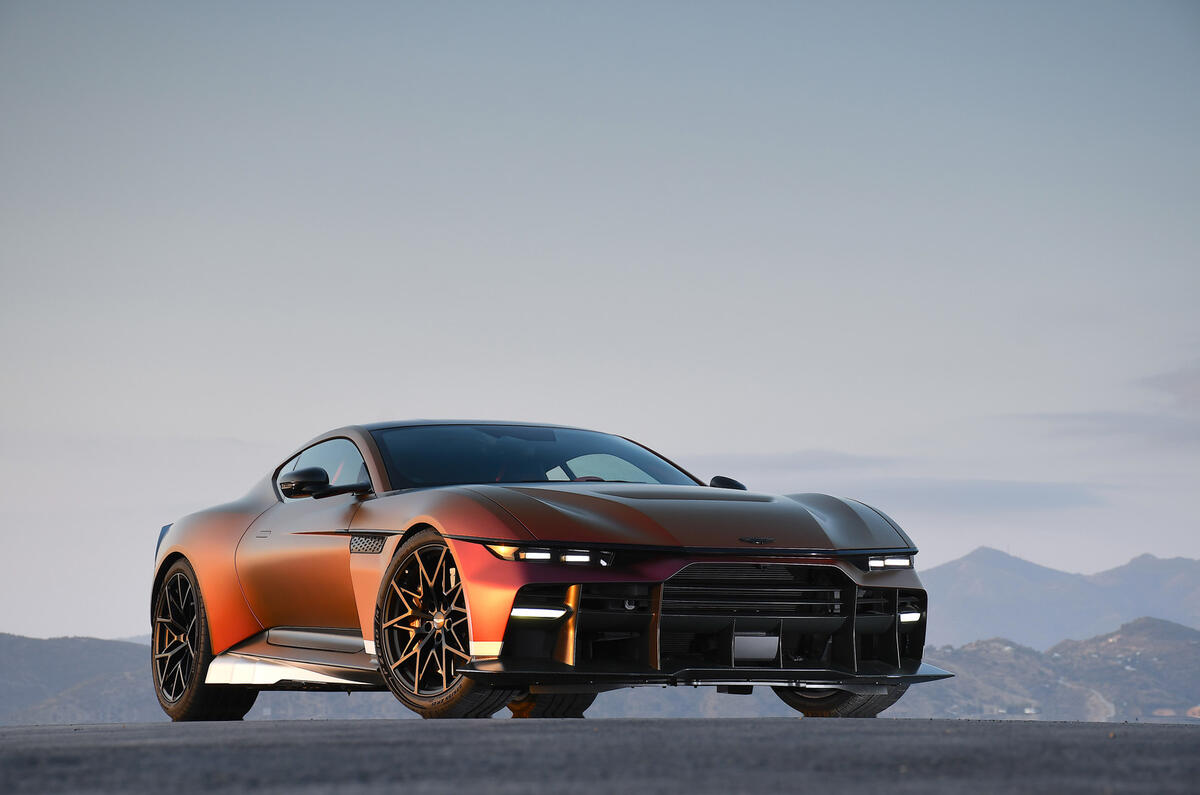
Few objects earn devotion the way a sports car does. The low nose, the sculpted flanks, the sound of an engine wound out on an open road: these are the things that keep the breed at the centre of car culture and at the top of every collector's wish list. Yet the question underneath the romance is a surprisingly precise one. What actually makes a sports car a sports car, as opposed to a handsome sedan that happens to be quick, or an SUV with a big number on the spec sheet? The answer is not top speed and it is certainly not the badge. It is a particular set of engineering decisions that only make sense together.
The definition is narrower than you think
Strip away the marketing and a sports car is a low, performance-first machine built around three commitments: rapid acceleration, precise steering and a drive that engages the person behind the wheel. That sounds broad, and deliberately so, because modern engineering has erased most of the old dividing lines. Hot hatches, sport sedans and even a few crossovers now record acceleration numbers that would have humiliated a sports car a generation ago. Shape alone no longer settles the argument. What settles it is the whole package: how the car is built, how its mass is distributed, and how faithfully it answers your inputs.
Form that answers to physics
A sports car is sculpted, not merely styled. Nearly every crease, vent and panel is doing a job related to airflow. The bodywork is drawn to slip through the air and, more importantly, to generate downforce, the pressure that pins the car to the tarmac as speed rises. Front splitters manage the air travelling beneath the nose, rear wings load the driven axle through fast corners, diffusers organise the turbulence leaving the underbody, and wide intakes feed both the engine and the brakes.
The same discipline governs what the car is made of. Carbon fibre panels, aluminium structures and advanced composites let engineers remove mass without surrendering rigidity or drama. Nothing on a serious sports car is decorative by accident.
The tyranny of mass
Size and weight give the game away faster than any brochure. Most sports cars live inside a tight envelope: roughly 4,200 to 4,800 mm long, 1,800 to 2,030 mm wide, and only 1,100 to 1,300 mm tall. That low roofline is engineering, not fashion. It drops the centre of gravity toward the road, which transforms cornering composure and all but eliminates the lean of a taller car.
Weight is the other half of the equation. A sports car typically weighs between 1,100 and 1,600 kg, well under the 1,300 to 2,000 kg of an ordinary sedan. Every kilogram removed improves the power-to-weight ratio, and that single ratio quietly governs acceleration, braking and agility all at once. It is why builders chase grams through the seats, the wheels and even the sound deadening.
Horsepower writes the headline. Power-to-weight decides how the car actually feels.
The engine, and how the power reaches the road
Ask an enthusiast to define a sports car and the engine is usually the first thing named. In the mainstream performance world, outputs run from about 300 to 700 hp; limited-run hypercars climb far past that, and a handful of record-chasing extremes have crossed 5,000 hp with multi-turbocharged, large-displacement engines. V6, V8, V10 and V12 layouts endure because they package strong power neatly and produce the voices that make the breed memorable.
Yet output is only half the story. How the power is delivered matters just as much. Rear-wheel drive remains the purist's choice for its balance and its unfiltered, driver-first character. All-wheel drive is chosen when the priority is traction and putting big horsepower down cleanly. Both exist to serve the same end: acceleration, grip and stability under real pressure. The Gulf's own market has become a proving ground for exactly these machines, as our look at the new golden age of GCC-spec supercars explores.
Balance is the whole game
A sports car reveals itself the instant you turn the wheel. Its behaviour is the product of suspension tuning, weight distribution and electronics working in concert, in real time. Many of the most focused cars place the engine near the centre of the chassis, a mid-engine layout that evens out the load between the axles and rewards the driver with predictable, neutral responses when the pace rises.
The suspension is firmer than an everyday car's, and increasingly adaptive, varying its damping according to the surface and the chosen mode to suppress body roll and keep the tyres honestly loaded. Layered over the mechanicals is a quiet net of electronics, traction control, stability management and torque vectoring, constantly reading slip and yaw and trimming power or braking at individual wheels. Done well, you never feel them working; you only feel in control.
What gets sacrificed
Performance is a series of trade-offs, and the cabin usually pays first. The traditional coupe or roadster is built around two seats. Where rear seats survive at all, legroom is nominal, fit for children or short hops rather than a family. Luggage tells the same story: most sports cars offer between 170 and 340 litres against the 450 to 550 of a mid-size sedan. This is not a flaw to be forgiven; it is the point. Less bulk and less mass buy a better power-to-weight ratio and a sharper car. Grand tourers and the growing class of sports SUVs bend these rules, folding genuine performance into usable space, which is precisely why they have become the pragmatic collector's second car.
Sports car or supercar?
The two words are used interchangeably, but they are not equals. A sports car delivers serious, engaging performance while remaining usable on an ordinary week. A supercar sits a tier above, with more extreme power, more advanced engineering, a far higher price and real scarcity. Every supercar is a sports car; only a rare few sports cars ascend to supercar. Where that line is drawn, and how the most exclusive examples are acquired, is the subject of our collector's guide to buying a limited-edition hypercar in the UAE.
Reading the breed before you buy
Understanding these traits is not academic. A light, rear-driven car on stiff springs will feel telepathic on a circuit and firm on a long Gulf commute. An all-wheel-drive car trades a little of that raw connection for composure and all-weather usability. The two-seat cabin and shallow boot matter enormously the day you try to use the car for anything beyond a weekend. The right choice is the one measured against your own life: the distances you drive, the storage you need, the climate you drive in, and how often you will genuinely push the car. Weigh the characteristics rather than the horsepower figure alone, and browse the current luxury and performance cars or the wider Luxury Cars journal when you are ready to go deeper.
A true sports car is the sum of many deliberate parts: an aerodynamic, lightweight body; a powerful, well-matched drivetrain; suspension and electronics tuned for precision; and a cabin that trades space for speed. Together they produce something a spec sheet can never fully capture, the connection between driver, machine and road. Learn to read those parts, and you will recognise the real thing the moment you see it.