The pre-owned luxury watch market is one of the fastest-growing segments in the industry, but that growth has also made counterfeiting more sophisticated than ever. Learning how to authenticate a luxury watch before buying isn't optional anymore - it's essential, whether you're spending $2,000 or $20,000. Here's a complete, practical framework for verifying authenticity before you commit to a purchase.
Step 1: Research the Exact Reference Number Before You Shop
Every serious authentication process starts before you ever see the physical watch. Look up the precise reference number for the model you want, and learn what configuration it should have - case metal, bezel material, dial layout, and production era all need to match. A single incorrect digit in a reference number can indicate a completely different (and sometimes fraudulent) configuration.
Step 2: Inspect the Case and Engravings Closely
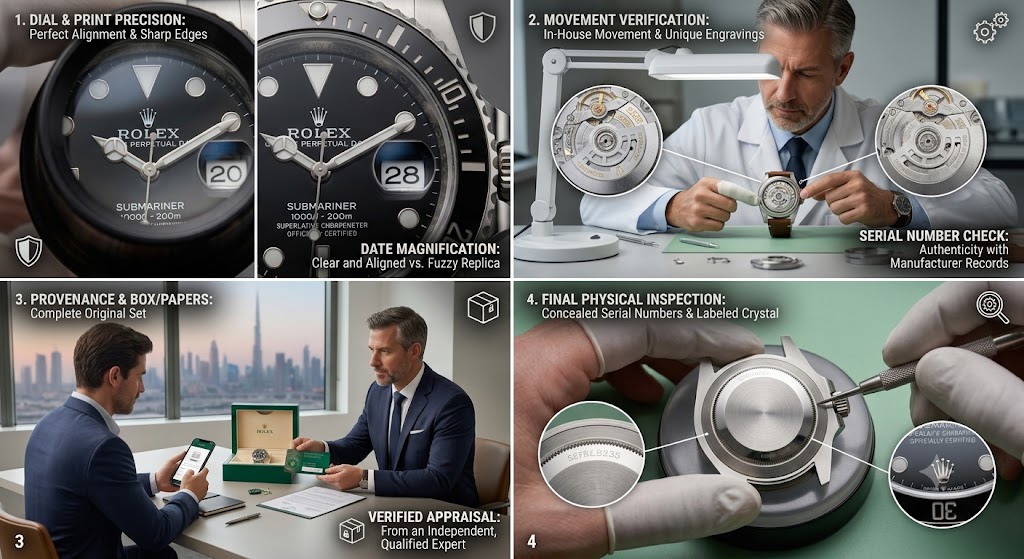
Authentic luxury watches have precisely executed logos, engravings, and serial numbers with no spelling errors, irregular spacing, or inconsistent font weight. Look inside the case back for serial numbers, hallmarks, and metal content stamps - missing or poorly executed markings are one of the most common signs of a counterfeit. Fading, uneven engraving, unexplained scratches, or peeling case plating are additional red flags.
Step 3: Verify the Serial Number
Every genuine luxury watch has a unique serial number that manufacturers use to track production. When buying pre-owned, confirm that the serial number is consistent with the claimed brand, model, and production year, and check that it shows no signs of alteration, re-engraving, or removal.
Step 4: Examine the Movement
Movement inspection is one of the most reliable authentication methods available, since counterfeiters rarely replicate the internal architecture of a genuine caliber accurately. Signs to look for include correct bridge and rotor engravings, proper finishing (perlage, Cotes de Geneve, or brand-specific decoration where applicable), and a smooth, quiet operating sound. If you're not confident inspecting a movement yourself, a qualified watchmaker can open the case back and confirm authenticity in minutes.
Step 5: Check the Dial Printing and Lume
Genuine luxury watch dials feature crisp, evenly spaced text with no smudging, misalignment, or incorrect fonts. Lume application (the luminous material on hands and markers) should be clean and consistent - sloppy or uneven lume application is a common counterfeit tell, even on otherwise convincing fakes.
Step 6: Review Documentation and Provenance
Comprehensive documentation strengthens both authenticity confidence and future resale value. Ideally, a pre-owned watch should come with its original box, warranty card, purchase receipt, and any service records. If a seller can't produce reasonable documentation, that doesn't necessarily mean the watch is fake - but it does mean you need to rely more heavily on physical inspection, and you should factor the lack of paperwork into your offer price.
Step 7: Buy From a Reputable, Verified Seller
This is arguably the single most important step. Research any dealer's reputation thoroughly - reviews, years in business, and whether they offer their own authentication guarantee or warranty. Reputable pre-owned dealers typically have their own in-house or third-party authentication process and will provide documentation confirming the watch has been verified. You can browse verified listings in the Gulf Edition watches marketplace.
Step 8: Examine the Watch in Person Whenever Possible
Photos, even good ones, can hide inconsistencies that are obvious in person - case finishing, weight, bracelet action, and clasp mechanisms are all much easier to assess when you can physically handle the watch. If you're buying remotely, ask for a video call or extensive close-up photography of the case back, movement (if visible), clasp, and dial before committing.
Step 9: Cross-Reference Current Market Pricing
A price that seems too good to be true relative to current market value is one of the strongest authentication red flags of all. Counterfeiters and scammers frequently use unrealistically low prices to create urgency and discourage careful buyers from doing their due diligence. Knowing which references hold value helps here - see our guide to the best watch brands for investment and resale value.
Step 10: When in Doubt, Get a Professional Appraisal
If you remain uncertain after your own inspection, a qualified independent watch appraiser or authorized service center can provide a definitive verdict, often through microscopic analysis or, in some cases, X-ray verification of internal components - without requiring the watch to be disassembled.
Quick Authentication Checklist
- Reference number matches claimed configuration
- Serial number is present, consistent, and unaltered
- Case engravings and logos are crisp with no errors
- Movement finishing and engravings match the brand's standards
- Dial printing and lume application are clean and precise
- Box, papers, and service history are available (or price reflects their absence)
- Seller has a verifiable, reputable track record
- Price is consistent with current market value
Ready to buy with confidence? Explore the Gulf Edition luxury watches collection.
Frequently Asked Questions
What is the easiest way to spot a fake luxury watch?
Inconsistent or poorly executed engravings, logos, and serial numbers are among the easiest red flags to spot, along with a price that seems significantly below current market value.
Do I need original box and papers to authenticate a watch?
No, but they significantly strengthen confidence in authenticity and future resale value. Without them, rely more heavily on physical inspection and buy only from a reputable, verified seller.
Can a jeweler authenticate a luxury watch?
Yes, many jewelers and independent watchmakers offer authentication services, and some use advanced tools like microscopic analysis or X-ray verification for a definitive assessment.
Is it safe to buy a pre-owned luxury watch online?
Yes, provided you buy from a reputable, well-reviewed dealer that offers its own authentication guarantee, and you request detailed photos or video of the case back, movement, and clasp before purchasing.
What's the most reliable authentication method?
Movement inspection is widely considered one of the most reliable methods, since counterfeiters rarely replicate the internal architecture, finishing, and engravings of a genuine caliber accurately.