Ask five different yacht brokers what a yacht costs, and you'll get five different answers, because "yacht" is a category that stretches from a $60,000 secondhand weekender to a $500 million floating estate with its own beach club and dive center. The honest answer is: it depends entirely on size, age, builder, and how you plan to use it.
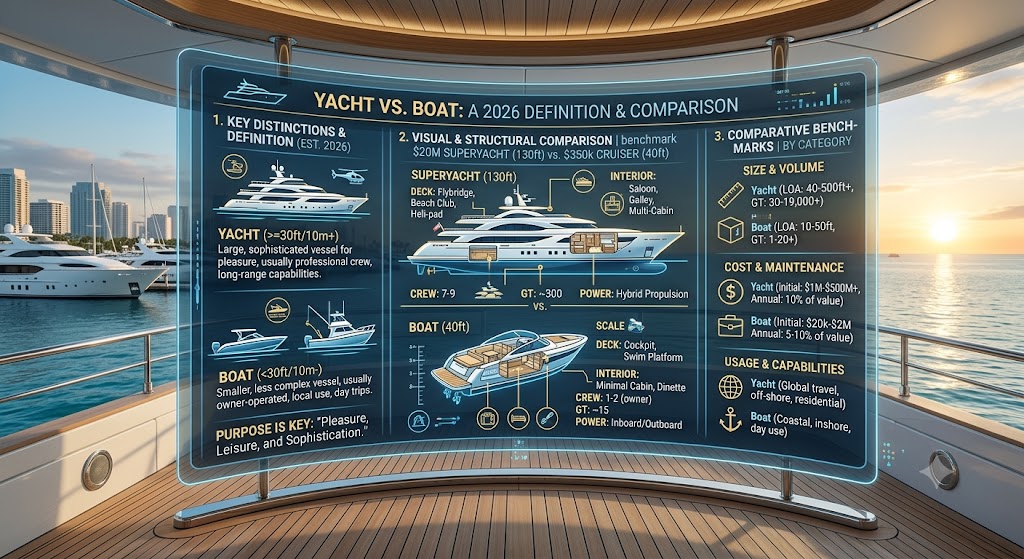
Here's a real breakdown of 2026 yacht prices by size and type, plus the ownership costs most first-time buyers don't see coming until after they've signed. If you are still deciding what actually separates a yacht from a boat, start with our guide to the difference between a yacht and a boat.
Yacht Prices at a Glance
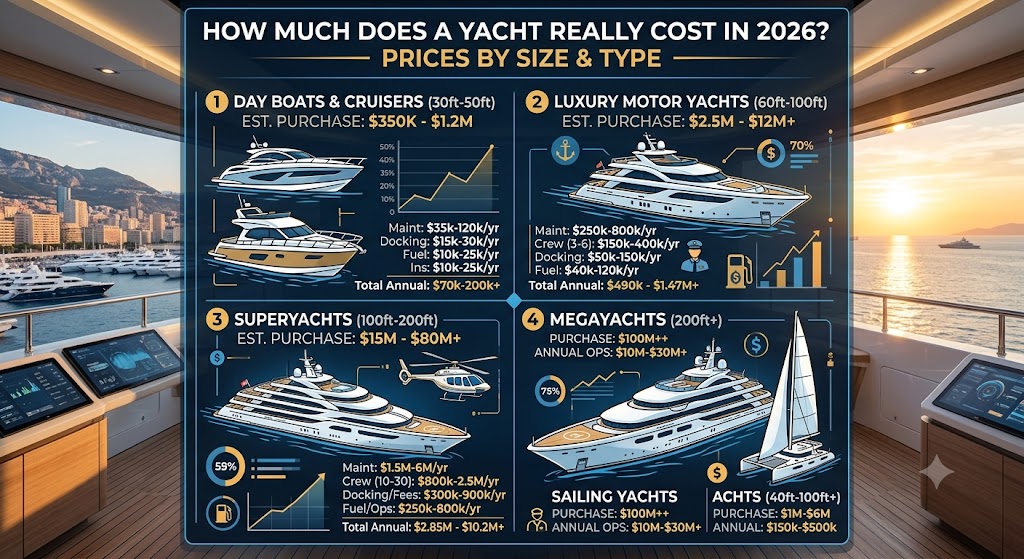
| Category | Typical Length | New Price Range |
|---|---|---|
| Entry-level / day boat | 20 to 35 ft | $50,000 to $500,000 |
| Small yacht | 35 to 60 ft | $300,000 to $4 million |
| Mid-size yacht | 60 to 80 ft | $1 million to $11 million |
| Luxury yacht | 80 to 100 ft | $5 million to $20 million |
| Superyacht | 100 to 200 ft | $10 million to $100 million+ |
| Megayacht / gigayacht | 200 ft+ | $100 million to $1 billion+ |
Used prices typically run 30 to 60% below new-build prices, depending on age and condition. Notice the ranges overlap between categories, that's normal. Builder reputation and customization level often matter more than length alone.
The 2026 Market, Briefly
Demand hasn't slowed down. Industry analysts put the global luxury yacht market at roughly $10 to $11 billion in 2026, on track to nearly double by the mid-2030s as the pool of ultra-high-net-worth buyers keeps growing. That growth is part of why prices, especially at the top end, have stayed firm even as broader luxury spending has wobbled.
Yacht Prices by Size, Explained
Entry-Level and Day Boats (Under 35 Feet)
Often called "pocket yachts" or "weekenders," these are the most accessible entry point into yachting. Expect a simple layout, one or two cabins at most, and a design built for day trips rather than long voyages. Older, well-used models can be found for well under $100,000, while a new, well-equipped model typically runs $300,000 to $500,000.
Small Yachts (35 to 60 Feet)
This is where "yacht" starts to mean something closer to a small floating home: real staterooms, a proper galley, and enough range for a genuine cruise. New small motor yachts average around $1 to $1.5 million, with sailing yachts in this range typically running a bit less. Used examples, especially those over a decade old, can be found for a fraction of new-build prices.
Mid-Size Yachts (60 to 80 Feet)
The most active category in the brokerage market. New mid-size motor yachts average around $4 to $5 million, while pre-owned examples range from roughly $1 million to $11 million depending on builder and vintage. This is also the size where a professional crew, a captain plus at least one deckhand, tends to shift from optional to necessary.
Luxury Yachts (80 to 100 Feet)
Cross 80 feet and you're solidly in luxury territory: multiple decks, larger crew quarters, and amenities like a Jacuzzi, gym, or fold-out beach club. Prices typically start around $5 million and climb toward $20 million for newer or more customized builds.
Superyachts (100 to 200 Feet)
Superyachts start around $10 million and can exceed $100 million. Price here is driven less by length and more by shipyard pedigree, names like Feadship, Lürssen, and Benetti command a real premium, along with gross tonnage and how much of the build is custom. A 150-foot superyacht from a top-tier European yard can easily out-price a 180-foot yacht from a less prestigious builder.
Megayachts and Gigayachts (200+ Feet)
At the very top of the market, price becomes almost secondary to exclusivity. The current largest yacht in the world stretches to nearly 600 feet. Vessels at this scale are rarely bought off a listing, most are custom-commissioned years in advance, with build costs running into the hundreds of millions and, at the extreme end, past a billion dollars. See our ranking of the world's largest yachts for the vessels leading that list.
New vs. Used: Where the Real Savings Are
Depreciation hits yachts hardest in the first few years, then levels off. A five to ten-year-old yacht in good condition can often be found for 40 to 60% less than the new-build price of a comparable model, which is exactly why most first-time buyers, even wealthy ones, start in the brokerage (used) market rather than commissioning new.
What Actually Drives the Price
Two yachts of identical length can differ in price by millions of dollars. The factors that matter most:
- Builder and brand. Names like Feadship, Lürssen, and Oceanco carry a premium for craftsmanship and resale value; production builders like Beneteau or Jeanneau are far more affordable.
- Motor vs. sailing. Motor yachts generally cost more than sailing yachts of the same length, largely due to engine and fuel systems.
- Age and condition. A recent refit can push a used yacht's price close to new-build levels.
- Custom vs. production. Fully custom builds cost significantly more than semi-custom or production-line models, but tend to hold their value better.
- Hull material. Fiberglass and composite is the most common and affordable choice; aluminum and steel hulls, common on long-range explorer yachts, cost more to build.
The Cost Nobody Mentions: Owning It After You Buy
The purchase price is just the entry fee. The industry's long-standing rule of thumb is that annual running costs equal roughly 10% of the yacht's value, though in practice it ranges from 6% to 12% depending on size and usage. On a $5 million yacht, that's $300,000 to $500,000 a year. That figure typically covers:
- Crew salaries - a captain alone can cost $60,000 to $150,000+ annually; larger yachts need a full crew of deckhands, stewardesses, engineers, and sometimes a chef
- Dockage and mooring - often 30 to 50% of total running costs, and steepest in high-demand marinas
- Maintenance and haul-outs - engine servicing, hull cleaning, anti-fouling, and routine repairs
- Insurance - typically 1 to 1.5% of the yacht's insured value each year
- Fuel - a major line item for motor yachts, especially at superyacht scale
Buying vs. Chartering: The Quick Gut-Check
If you're not sure ownership makes sense yet, it's worth comparing to chartering. A week-long charter on a crewed sailing yacht or catamaran can start around $10,000 to $25,000, while entry-level superyacht charters start closer to $20,000 to $35,000 a week before taxes and provisioning. As a rough rule, ownership only starts to pencil out financially once you'd otherwise charter more than about 8 to 12 weeks a year. Below that, chartering is almost always the cheaper path to the same experience.
When you're ready to see what's on the market, browse the Gulf Edition yachts for sale or explore the full luxury yachts collection.
Frequently Asked Questions
What's the cheapest a yacht can cost?
A small, older used yacht, generally anything over roughly 30 to 40 feet with yacht-style amenities, can sometimes be found for under $50,000, though it will likely need maintenance investment soon after purchase.
Is a yacht a good financial investment?
Not typically. Like most recreational vehicles, yachts depreciate over time, and the ongoing running costs mean most owners treat yachting as a lifestyle expense rather than an appreciating asset.
How much does it cost to maintain a yacht per year?
Plan on roughly 6 to 12% of the purchase price annually, trending toward the higher end for older yachts or those with full-time crew.
What's the most affordable way to experience yacht ownership?
Fractional ownership and yacht club memberships let you access a yacht for a fraction of full-ownership cost, a good fit for buyers who'd use a yacht more than a single charter allows, but not enough to justify buying outright.
Do I need to be a billionaire to own a yacht?
No. Entry-level yachts start well under $500,000, a real stretch for most people, but far from billionaire territory. It's the largest superyachts, not yachts in general, that require nine or ten-figure budgets.
How much does a used yacht cost compared to new?
Expect to pay 30 to 60% less for a used yacht than a comparable new build, with the steepest discounts on yachts eight to fifteen years old before major systems typically need replacing.
.jpg)